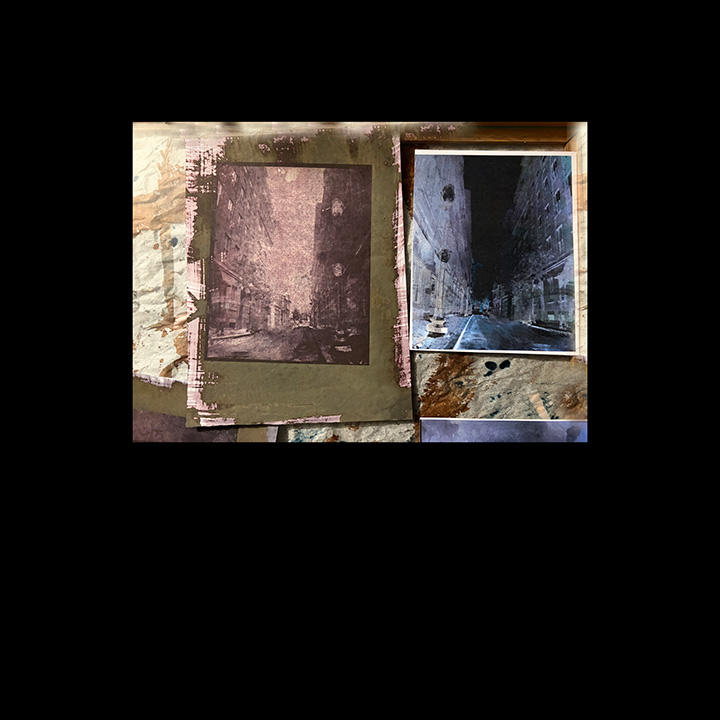
about 24 years ago a friend and I were talking about photography. he was living the life of a freelance assignment photographer in NYC and preparing to move back to his home in Europe with is family, and I was doing freelance work here where I live.
we talked about how photography had changed and was changing, and how digital was starting to replace what we had always loved, paper and film. and it was then that I first wanted to make salt prints.
I had heard of them, mainly through history of photography classes, it was Talbot’s negative positive process. It starts off with paper saturated with salt water, and then it’s dried. The next step is coating the paper with silver nitrate that has been dissolved in water, and then it is dried again. That’s how it starts.
This silver chloride photo paper is now light sensitive and you might imagine it is like the great great grandparent of modern silver chloride papers like AZO or LODIMA or LUPEX papers. The Salted Emulsion recipe that I’ve been coating paper with for nearly a decade is similar to a salt-sentisized with silver paper, but it’s suspended in gelatin instead of just salt, paper, water and silver.
To get the in camera negative of this photographic system (the Calotype / Talbotype ) you add Potassium Bromide and Potassium Iodide ( like with a modern photographic emulsion, or the collodion used to make wet plates / ambrotypes / tintypes et C. The salted paper ( with these additional things ) is exposed in the camera, and developed with developer, stop bath and fixer (sound familiar ?) and this negative once dried ( and sometimes made somewhat translucent with wax or oil &c ( is contact printed onto the salted paper. Unlike the “negative” the plain paper with salt, water and silver, requires a long exposure, and it is not developed but washed ( sometimes toned with gold or selenium ) and fixed.
Some of Nicephore Niepce original works were similar ( paper with salt and water ). He did not shorten his exposure with the other chemicals, or know how to stabilize the images either. My in camera sun prints are loosely based on his process but I learned by mistake you can stabilize the images with sodium carbonate heavy caffenol, and eventually try to fix it. As you might have read in this diary, I’ve had sometimes positive and sometimes negative results. I also stabilize the images “digitally” you might say, by rephotographing it with either a camera or a scanner.
I’ve fallen back into being interested in salt prints, and I am slowly understanding the “why am I doing this” part of the equation.
All these years of making paper negatives, and scanning and presenting them digitally, either as pigment / ink prints, or on the internet have been a great experience but now I want to make some things that are not only tangible but they will have a lifespan.
I am not wearing rose colored glasses, and I know people will suggest plain old photo paper prints can be archival ( and I know this having submitted these types of negatives and prints to state and federal archives ), and I know that modern digital prints using pigment and a variety of “ink jet papers” are suggested to be archival but I don’t know how true this is. And I don’t really think it matters because nothing lasts forever.
that has been my stance for years now, that archival imagery, except when being submitted to a repository, really didn’t matter too much to me. I allowed images to shift with light and time, to morph into something else, to be kinetic. I allowed certain times to be frozen in a “snapshot” of this record of time and light, but these records have been digital. now I want to save these images as visual records using the most rudimentary silver process I can use: the salt print.
over the years I’ve waxed my paper negatives using paraffin, or I’ve printed the images on clear film or pictorico digital negative film, now I’ve stopped doing that, and enjoying the results. The UV and Blue Light required to expose the Salted Paper takes a long time to penetrate the paper, and that’s OK. The negatives are made with a camera ( a digital one sometimes, or a obscura other times ) and I don’t mind the modern “hybrid” intervention, Im still not married to an all analog process to me it doesn’t matter.
The prints so far have been small contact prints. I’ve put the salted paper with it’s negative in a contact frame and left it in the sun for hours. Sometimes all day, sometimes just a few hours.
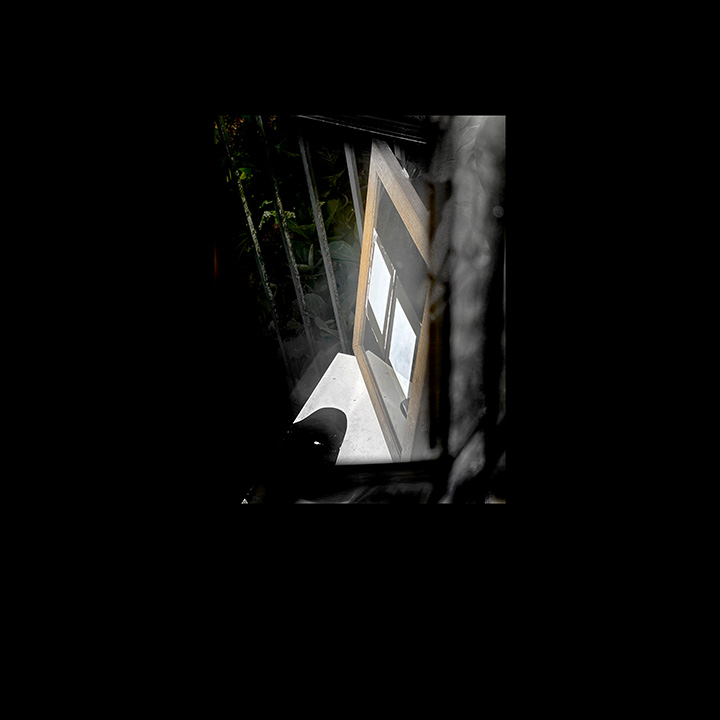
The paper is then brought to the darkroom sink where its just washed
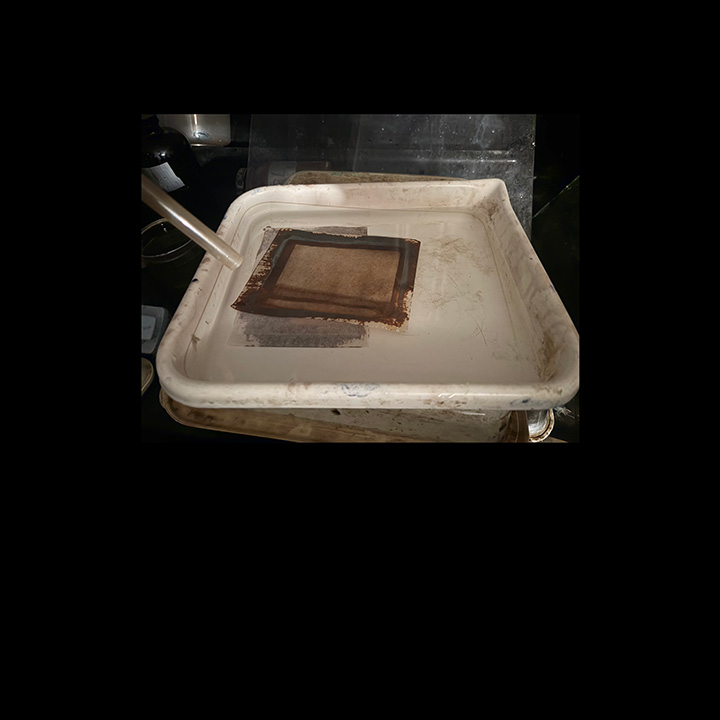
it’s a very simple process, even making the digital negatives is very easy.
and the results are fun, and that’s the whole point of photography, no matter the strain you practice, for it to be fun.